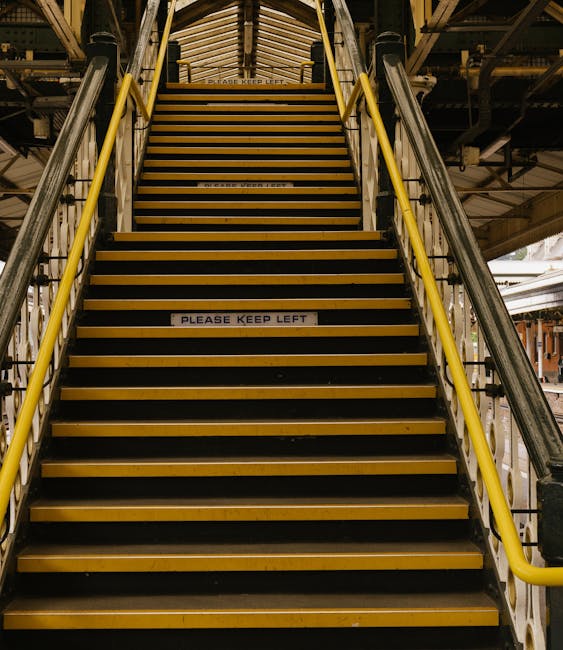
Narrow stairs and access problems man and van solutions Greenwich
If you live in Greenwich and your staircase is tight, twisty, steep, or awkwardly placed, moving day can feel far more complicated than it should. That is exactly where Narrow stairs and access problems man and van solutions Greenwich come in. The right approach turns a frustrating move into a controlled, careful process - one that protects your belongings, your walls, and frankly your sanity.
In real terms, access problems are not just about stairs. They can include narrow hallways, low ceilings, shared entrances, no lift, difficult parking, basement flats, top-floor walk-ups, and bulky items that refuse to behave. A good man and van team plans for all of that before the van even arrives. This guide explains how it works, what to expect, and how to avoid the mistakes that catch people out at the last minute.
Whether you are moving a one-bed flat, clearing a house, or relocating a few pieces of furniture, the goal is the same: keep the move safe, efficient, and predictable. Let's face it, no one wants to wedge a wardrobe halfway down a staircase at 8am on a wet Greenwich morning.
Table of Contents
- Why Narrow Stairs and Access Problems Matter
- How the Solution Works in Practice
- Key Benefits and Practical Advantages
- Who This Is For and When It Makes Sense
- Step-by-Step Guidance
- Expert Tips for Better Results
- Common Mistakes to Avoid
- Tools, Resources and Recommendations
- Law, Compliance, Standards, and Best Practice
- Options, Methods, or Comparison Table
- Case Study or Real-World Example
- Practical Checklist
- Conclusion
- Frequently Asked Questions
Why Narrow stairs and access problems man and van solutions Greenwich Matters
Access problems change the whole shape of a move. A sofa that would be simple in an open hallway can become a three-person puzzle when the stairwell turns sharply, the banister sits too close, and the landing is barely wide enough to pivot. Greenwich has plenty of homes and flats where that sort of challenge is normal, not unusual.
That matters because the risks are real. Furniture can get scratched. Door frames can chip. Glass can crack. Lifting awkward items the wrong way can also strain backs and shoulders. You do not want to discover those issues after the item is already halfway out of the property.
A proper access-aware moving service changes the job from reactive to planned. Instead of improvising in the hallway, the team arrives ready with the right vehicle, the right lift technique, and a better understanding of what will fit and what will not. In our experience, that bit of planning saves more time than people expect.
There is also a big emotional side to it. Access problems make moving feel stressful even before the first box is lifted. When you know someone has already thought through the stairs, parking, item sizes, and route out of the property, the whole day feels calmer. Small thing, big difference.
If you are comparing services, it helps to look at broader options too. Some moves are best handled through man and van support, while larger or more complex jobs may fit better with fuller removal services or a specialised flat removals approach.
How Narrow stairs and access problems man and van solutions Greenwich Works
The process is usually straightforward, but the detail matters. The first job is understanding the property itself. That means more than asking how many rooms you have. A useful assessment looks at stair width, landing size, ceiling height, turning space, lift access, parking distance, and whether anything needs dismantling before the move.
Once the access is understood, the team can decide how to load the van, what size vehicle to use, and whether certain items need two-person carrying, protective wrapping, or a different route. For example, a tall chest of drawers may go down one staircase head-on, but a sofa might need to be tilted carefully and carried at an angle. Different item, different tactic.
In many cases, the moving crew will also check whether the van can park close enough to reduce carrying distance. That sounds minor until you are hauling boxes through a narrow front path or across a long service yard. Every extra step makes the move slower and more tiring.
Where access is especially difficult, the team may suggest breaking items down, removing legs, wrapping corners, or moving bulky furniture separately from boxes. This is where a practical packing and boxes service can help, because well-packed boxes are easier to stack, carry, and balance in tight spaces.
For some households, the answer is not just a van - it is the right van, the right loading order, and a crew that already knows how to handle awkward entries without turning the staircase into a hazard zone.
Key Benefits and Practical Advantages
The biggest benefit is simple: fewer problems on moving day. But there are several more practical advantages that are easy to overlook when people are focused only on price.
- Less risk of damage: careful handling, better protection, and better route planning reduce knocks and scrapes.
- Less physical strain: trained lifting and carrying means you are not exhausting yourself trying to manoeuvre a wardrobe downstairs.
- Better time control: access planning stops the move from stalling halfway through.
- Smarter vehicle choice: the van size can be matched to the job instead of guessed.
- More confidence: you know the move has been thought through, which honestly changes the mood of the day.
Another quiet advantage is flexibility. A man and van setup is often ideal for smaller or mid-sized jobs, but it can still be adapted for awkward access, multiple trips, or mixed loads. That makes it a good fit for flats, student moves, downsizing, and furniture collection. If you need temporary space while figuring things out, storage can also be part of the plan.
And then there is speed. Not rushing, speed. The good kind. The kind that comes from having a clear route, wrapped items ready, and no unnecessary faffing about at the front door.
Who This Is For and When It Makes Sense
This type of move suits anyone dealing with a property that is not easy to access. That includes top-floor flats, older terraced homes, maisonettes with tight turns, basement properties, and buildings where parking is tricky or loading space is limited.
It is especially useful if you are moving:
- a sofa, bed, wardrobe, or dining table through a narrow staircase;
- boxes and personal items from a small flat;
- student belongings at the end of term;
- office items from a building with restricted access;
- heavy or awkward furniture that cannot be carried safely alone.
It also makes sense when you do not need a full lorry or a large removal team. For a smaller load, a service such as man with van or man with a van can be the practical middle ground: less costly than a big move, but still organised enough for awkward access.
On the other hand, if the job is commercial, involves multiple desks, or needs careful scheduling around staff and building access, a dedicated commercial moves service may be the better fit. Not every staircase problem is a domestic one.
Step-by-Step Guidance
Here is the clearest way to handle a move with tight stairs or awkward access.
- Measure the problem areas. Check stair width, landing depth, door openings, and any bends or low ceilings.
- Identify bulky items early. Sofas, mattresses, wardrobes, bed frames, and appliances are the usual troublemakers.
- Decide what needs dismantling. Remove table legs, bed slats, mirrors, shelves, and anything else that can safely come apart.
- Book the right help. Choose a service that understands access issues, not just one that can send a van.
- Tell the team the awkward bits. Be honest about the stairs, the parking, the lift, and the distance from van to door.
- Pack in a way that supports carrying. Make boxes manageable, secure lids properly, and avoid overfilling.
- Clear the route. Hallways, bikes, shoes, plant pots, bins - move the clutter out of the way first.
- Protect surfaces. Use blankets, covers, and edge protection where needed.
- Load in the right order. Heavy or fragile items first, depending on the route and the plan.
- Do a final walk-through. Check for forgotten items before the van leaves. It always happens to somebody, usually with the kettle.
If you are preparing your belongings ahead of time, packing and unpacking services can take some pressure off. That is often worth it when you are already dealing with a difficult staircase.
Expert Tips for Better Results
The best access moves usually come down to small choices made early. Here are the ones that make a genuine difference.
- Send photos before move day. Staircases, front doors, and landings are hard to describe well on the phone.
- Be specific about dimensions. "Big sofa" is not enough. Give width, height, and length if you can.
- Keep one person on route control. Too many voices in a tight hallway can make things chaotic fast.
- Use proper wrapping on corners and edges. A cheap blanket beats a chipped banister every time.
- Leave extra time for walk-ups. Access problems are rarely solved by optimism alone.
- Think about weather. Rain, wet steps, and muddy shoes make narrow access jobs harder and more dangerous.
One practical little trick: if a piece of furniture feels borderline too large, plan for dismantling before the move starts. Waiting until it gets stuck in the stairwell is not a plan. It is a plot twist.
And if you are dealing with a particularly delicate item, such as a upright piano or a heavy instrument, specialist handling is a different conversation entirely. In that case, piano removals may be the safer route.
Common Mistakes to Avoid
A lot of access problems become more difficult because of simple oversights. The good news is that most of them are avoidable.
- Underestimating the staircase. A stairwell that looks fine from the bottom can become tight at the first bend.
- Booking without access details. If the team does not know about the narrow entry, they cannot plan properly.
- Packing oversized boxes. Large heavy boxes are miserable on stairs and can be unsafe to carry.
- Leaving furniture assembled unnecessarily. A few screws removed early can save a lot of trouble later.
- Ignoring parking restrictions. The van may not be able to stop where you imagine.
- Assuming one person can manage it all. Some items really do need two people, or more.
There is another common one: people focus on the van and forget the exit route inside the property. The front door might be wide enough, but the stair landing could be the true bottleneck. That is where things get awkward, and quickly.
Tools, Resources and Recommendations
You do not need a warehouse full of equipment to manage a difficult move. A few sensible tools go a long way.
- removal blankets and furniture covers
- strong tape and labels
- ratchet straps for securing items in the van
- gloves with a good grip
- basic tools for dismantling beds and tables
- door protectors and floor coverings where appropriate
It also helps to have a clear moving folder, even if it is just a notes app on your phone. Keep stair measurements, item dimensions, parking notes, and contact details in one place. Sounds dull. Saves headaches.
If you are comparing moving options, it may also help to look at related services such as furniture removals for individual items, house removals for larger domestic jobs, or home moves if you want the move organised end to end.
For budget planning, the cleanest next step is usually to review pricing and quotes and compare what is included, not just the headline number.
Law, Compliance, Standards, and Best Practice
For householders, the main concern is usually safety and care rather than legal complexity. Still, good moving practice in the UK should reflect sensible handling, proper lifting technique, and attention to property access and public spaces. That means using enough people for the job, avoiding unsafe carrying methods, and not blocking entrances or pavements unnecessarily.
For businesses, the expectations are a bit broader. A move should be planned in a way that protects staff, equipment, and building users. In practice that means identifying hazards, managing access, and keeping the process controlled. A reputable mover should also be clear about health and safety policy arrangements and insurance and safety considerations.
If you are in a block of flats or a shared property, it is also wise to respect building rules, loading times, and communal areas. That is not just courtesy. It prevents complaints, delays, and avoidable friction with neighbours. Greenwich life can be busy enough already.
Where questions about service terms arise, the safest approach is to read the provider's terms and conditions carefully and ask for clarification before the move. No one enjoys fine print, but it matters when access is tight and timing is sensitive.
Options, Methods, or Comparison Table
Not every access problem needs the same solution. Here is a simple comparison to help you decide what fits best.
| Option | Best for | Strengths | Limitations |
|---|---|---|---|
| Man and van | Small to medium moves with awkward access | Flexible, practical, usually efficient for flats and furniture | May not suit very large or multi-room moves |
| Full removals team | Larger homes or more complex moves | More hands, more structure, better for heavier workloads | Can be more than you need for a small load |
| Furniture-only collection | Single items or a few bulky pieces | Simple and focused, often faster | Not ideal for full household contents |
| Storage + staged move | When access or timing is messy | Reduces pressure, allows split deliveries | Requires extra planning and possibly extra cost |
The best option is not always the biggest one. A careful man and van service can be the smartest answer for a narrow staircase move, especially in flats where space is tight and every metre counts.
Case Study or Real-World Example
A fairly typical Greenwich scenario: a person is moving out of a second-floor flat in a Victorian conversion. The staircase is narrow, the landing turns sharply, and the sofa is just a little too long to carry comfortably upright. There is no lift, parking is a short walk away, and the tenant has already packed more boxes than they meant to. Classic.
The fix is not brute force. First, the team checks measurements and asks for photos. Then they remove the sofa feet, wrap the arms, and plan the route down the stairs with one person guiding at the top and another at the bottom. Boxes are loaded first, the sofa last, and the van is parked as close as possible without causing a problem. The move takes longer than a wide-open ground-floor job, naturally, but it stays controlled and nothing gets damaged.
That is the whole point. Not dramatic. Just steady, sensible, and far less stressful than trying to "wing it" on the day.
For this sort of move, people often also ask about the difference between a standard van and a removal van. In short, the right vehicle is the one that fits the access plan and the load without forcing unsafe shortcuts.
Practical Checklist
Use this checklist before moving day. It is simple, but it works.
- Measure stair width, landing space, and door openings
- Photograph any awkward entry points
- List all large furniture and appliances
- Decide what can be dismantled safely
- Pack boxes to a manageable weight
- Label fragile or awkward items clearly
- Confirm parking and loading access
- Clear hallways, stairs, and doorways
- Protect floors, corners, and bannisters where needed
- Keep essentials separate for easy access after arrival
- Check insurance, terms, and service details before booking
- Leave a little breathing room in the schedule
That last point matters more than people think. A move with narrow stairs is rarely the right place to run on strict optimism.
Conclusion
Narrow stairs and awkward access do not have to turn a move into chaos. With the right planning, the right vehicle, and the right people, even a tricky Greenwich property can be managed safely and calmly. The key is to treat access as part of the move, not as a surprise to deal with later.
Whether you are moving a few boxes, a sofa, or an entire flat, the smartest approach is usually the one that reduces risk first and saves time second. That is how you keep the day under control and avoid the kind of moving story everyone laughs about later - except the person carrying the wardrobe.
If you are still weighing up the best route for your move, it is worth speaking early, sharing the awkward details, and choosing a service that understands the reality of Greenwich homes. A little honesty at the start makes everything easier.
Get a free quote today and see how much you can save.
And if the stairs are giving you that familiar look already, take a breath - there is usually a sensible way through it.
Frequently Asked Questions
What counts as a narrow stairs or access problem in a move?
It can be any obstacle that makes carrying items harder than normal, including tight staircases, sharp turns, low ceilings, small landings, no lift, or difficult parking close to the property.
Can a man and van service handle a top-floor flat in Greenwich?
Often yes, provided the load is suitable and the access details are shared in advance. For heavier or larger moves, it may be better to use a more fully staffed removal service.
Should I measure the stairs before booking?
Yes, absolutely. Measurements help avoid guesswork and make it easier to plan whether furniture needs dismantling or whether a different route is needed.
What if my sofa or wardrobe does not fit down the stairs?
Sometimes the item can be dismantled, but not always. If it truly will not fit safely, you may need a different carrying method or a specialist move for that item.
How do movers protect walls and bannisters in tight spaces?
They may use blankets, covers, edge protection, and careful lifting techniques. The exact approach depends on the property and the type of item being moved.
Is it cheaper to book a small van for an access problem move?
Not always. A smaller van can be useful, but if the job requires multiple trips or extra labour, the overall cost may rise. The best value is the setup that matches the move properly.
Do I need to dismantle furniture myself?
It helps if you can, but some movers can assist with basic dismantling. Beds, tables, and some wardrobes are commonly taken apart to make access easier.
What should I tell the mover before moving day?
Share stair width, parking details, floor level, lift access, item sizes, and any restrictions from the building. The more accurate the information, the smoother the move.
Can access problems affect the time it takes to move?
Yes. Narrow stairs, long carrying distances, and restricted parking all add time. A good team will factor that in rather than rushing and making mistakes.
Is this type of move suitable for office relocations too?
Yes, especially in smaller offices or buildings with awkward access. For larger or more structured workplace moves, a dedicated office relocation approach is usually better.
What if I only need one or two items moved?
That is often ideal for a man and van setup. It can be a practical choice for furniture pick-ups, single-item removals, or short-distance jobs with tricky access.
How do I know whether I need storage as well?
If your new place is not ready, or if access means you need to move in stages, storage can make the process much easier. It is worth considering if the timing feels messy.
Where can I learn more about the company before booking?
You can review the about us page, check the insurance and safety information, and use the contact us page if you want to ask about your particular staircase or access issue.